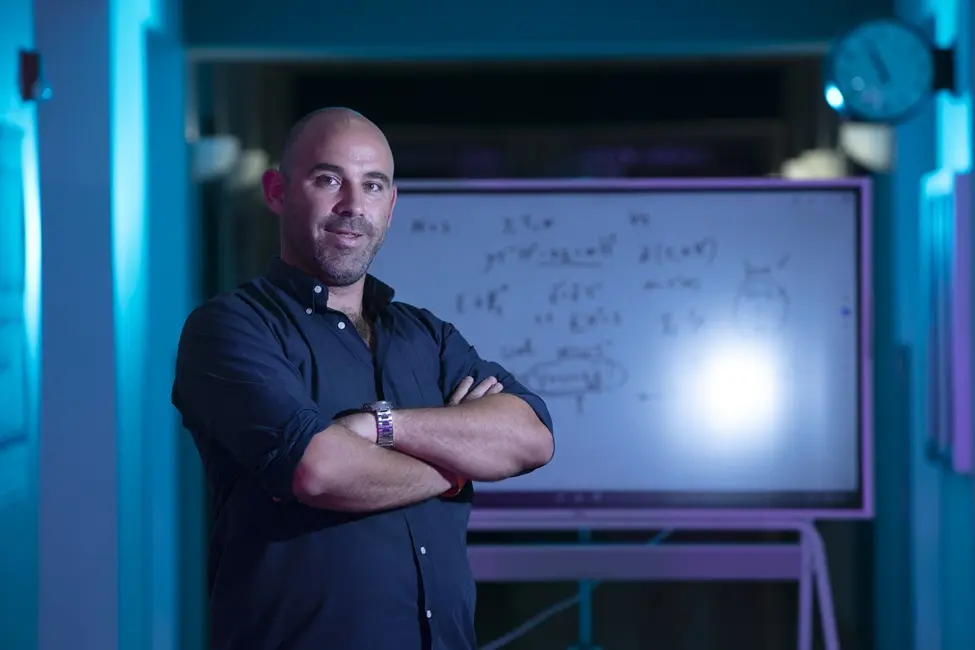
Florida Atlantic University is receiving $400,000 from the National Science Foundation to build digital defenses against the potential threat of quantum computers. The funding will support research led by Edoardo Persichetti, Ph.
D., professor in FAU’s Department of Mathematics and Statistics, to develop cryptographic protocols extending beyond standard encryption. Persichetti explains, “This NSF support gives us an opportunity to take the next step in post-quantum cryptography by moving beyond basic encryption and signatures toward more advanced protocols.” The project will use lattices, error-correcting codes and group actions to improve the security and efficiency of these new methods.
FAU Secures NSF Funding for Advanced Post-Quantum Cryptography
Florida Atlantic University will expand its work into advanced cryptographic functions beyond encryption and digital signatures, supported by a $400,000 grant from the National Science Foundation. The funding, awarded for the project “Collaborative Research: SaTC 2.0: RES: Post-Quantum Cryptographic Protocols with Advanced Functionalities,” will focus on blind, threshold, multi, and verifiable random functions, capabilities increasingly vital for decentralized systems and privacy-preserving technologies. This research differs from earlier efforts that primarily addressed foundational encryption methods in the face of potential quantum computing threats. Veronika Kuchta, Ph. D., is building upon existing mathematical foundations for post-quantum cryptography.
FAU’s prior contributions to the field, including authorship on the NIST-selected HQC and ML-KEM key-encapsulation mechanisms and the CRYSTALS-DILITHIUM digital signature algorithm, position the university as a key player in the development of quantum-resistant standards. A university spokesperson stated, “Our faculty are not only contributing to the development of technologies designed to protect the nation’s digital infrastructure but are helping shape the next generation of post-quantum security.” The grant will also facilitate research mentoring and outreach, training students in this critical area as quantum computing advances.
This award reflects Florida Atlantic’s growing strength at the intersection of mathematics, cryptography, cybersecurity and emerging technologies.
Valery Forbes, Ph
Lattice Structures and Protocols for Enhanced Cryptographic Functions
The project’s focus extends beyond resisting quantum decryption; researchers will develop cryptographic protocols supporting blind signatures, threshold signatures, multisignatures and verifiable random functions, expanding the utility of post-quantum cryptography for emerging applications. These advanced functions allow for secure participation in digital transactions and systems while safeguarding sensitive data and ensuring the integrity of digital processes, a capability not fully addressed by earlier efforts concentrating on foundational encryption methods.
Veronika Kuchta, Ph. Veronika Kuchta, Ph.D., is co-principal investigator. The team intends to use zero-knowledge proofs and group-action frameworks during analysis, aiming to create protocols that are not only resistant to quantum attacks but also practical for real-world implementation.
This approach differs from previous work that primarily focused on establishing the basic building blocks of post-quantum cryptography, instead concentrating on building more complex and versatile cryptographic systems. “The grant will allow us to develop new cryptographic constructions, rigorously analyze their security and investigate how they can be made more efficient and scalable. It also will help us train the next generation of researchers in an area that will be increasingly important as quantum computing advances,” said Persichetti.
The selection of HQC for standardization by the National Institute of Standards and Technology demonstrates the importance of developing cryptographic systems capable of withstanding quantum threats, and this project builds upon that momentum. The university stated, “This award reflects Florida Atlantic’s growing strength at the intersection of mathematics, cryptography, cybersecurity and emerging technologies.” By focusing on advanced functionalities, the FAU research aims to protect increasingly sophisticated digital systems in the years ahead, addressing a critical gap in current post-quantum cryptographic development and preparing for a future where quantum computers pose a significant threat to existing security infrastructure.
This NSF support gives us an opportunity to take the next step in post-quantum cryptography by moving beyond basic encryption and signatures toward more advanced protocols that can address the increasingly complex security needs of emerging technologies.
Edoardo Persichetti, Ph
HQC Standardization and FAU’s Leadership in Quantum-Resistant Algorithms
This recognition directly informs the focus of a new $400,000 National Science Foundation grant awarded to FAU, which aims to build upon HQC’s success by developing advanced cryptographic functionalities. The project’s scope extends beyond protocol development to include rigorous security proofs grounded in well-defined computational assumptions.
Zero-knowledge proofs and group-action frameworks will be central to the analysis, allowing researchers to verify protocol correctness without revealing sensitive information. This emphasis on training is a key component, with the project designed to provide research experiences and outreach opportunities for students entering the field of cryptography and cybersecurity, ensuring a pipeline of expertise to address future digital security challenges.
The selection of HQC for standardization demonstrated the importance of developing cryptographic systems that can withstand quantum threats. This project expands that effort into advanced functionalities that will be needed to protect increasingly sophisticated digital systems in the years ahead.

See today’s quantum computing news on Quantum Zeitgeist for the latest breakthroughs in qubits, hardware, algorithms, and industry deals.